

Garden Tools That Make Restorative Spaces Work
In therapeutic horticulture, we often talk about the healing power of plants, the benefits of nature exposure, and the thoughtful design of restorative garden spaces. These elements matter deeply, but there’s another member of the therapeutic team that is often overlooked.
Garden tools.
It might sound simple, but the tools we choose, and how we introduce them, can determine whether a therapeutic garden space is truly accessible, comfortable, and sustainable for participants. The right tool can transform a frustrating task into a satisfying one. The wrong tool can create unnecessary strain, fatigue, or even discourage someone from participating again.
This perspective has been shaped in large part by the work of Emilee Weaver, a therapeutic horticulture educator and practitioner with more than 25 years in professional horticulture and over 15 years designing therapeutic horticulture and horticultural therapy programs. Emilee co-authored The Profession and Practice of Horticultural Therapy (2019), one of the first comprehensive textbooks in the field, and has helped train practitioners through university certificate programs and international collaborations.
In her teaching, Emilee often reframes tools in a way that resonates strongly with practitioners:
Tools aren’t just equipment. They’re active members of the therapeutic team.
When selected thoughtfully and used intentionally, adaptive gardening tools bridge the gap between a participant’s abilities and the task at hand. They help transform barriers into opportunities for engagement.
Table of Contents
Choosing the right gardening tools is one of the most practical and often overlooked ways to make therapeutic horticulture programs more accessible and effective. Whether you’re working with traditional tools or purpose-built adaptive equipment, the key is matching the tool to the task and the person using it. Thoughtful tool selection reduces physical strain, conserves energy, and builds participant confidence. Turning potential barriers into meaningful opportunities for engagement.
Rethinking the Difference Between "Traditional" and "Adaptive" Gardening Tools
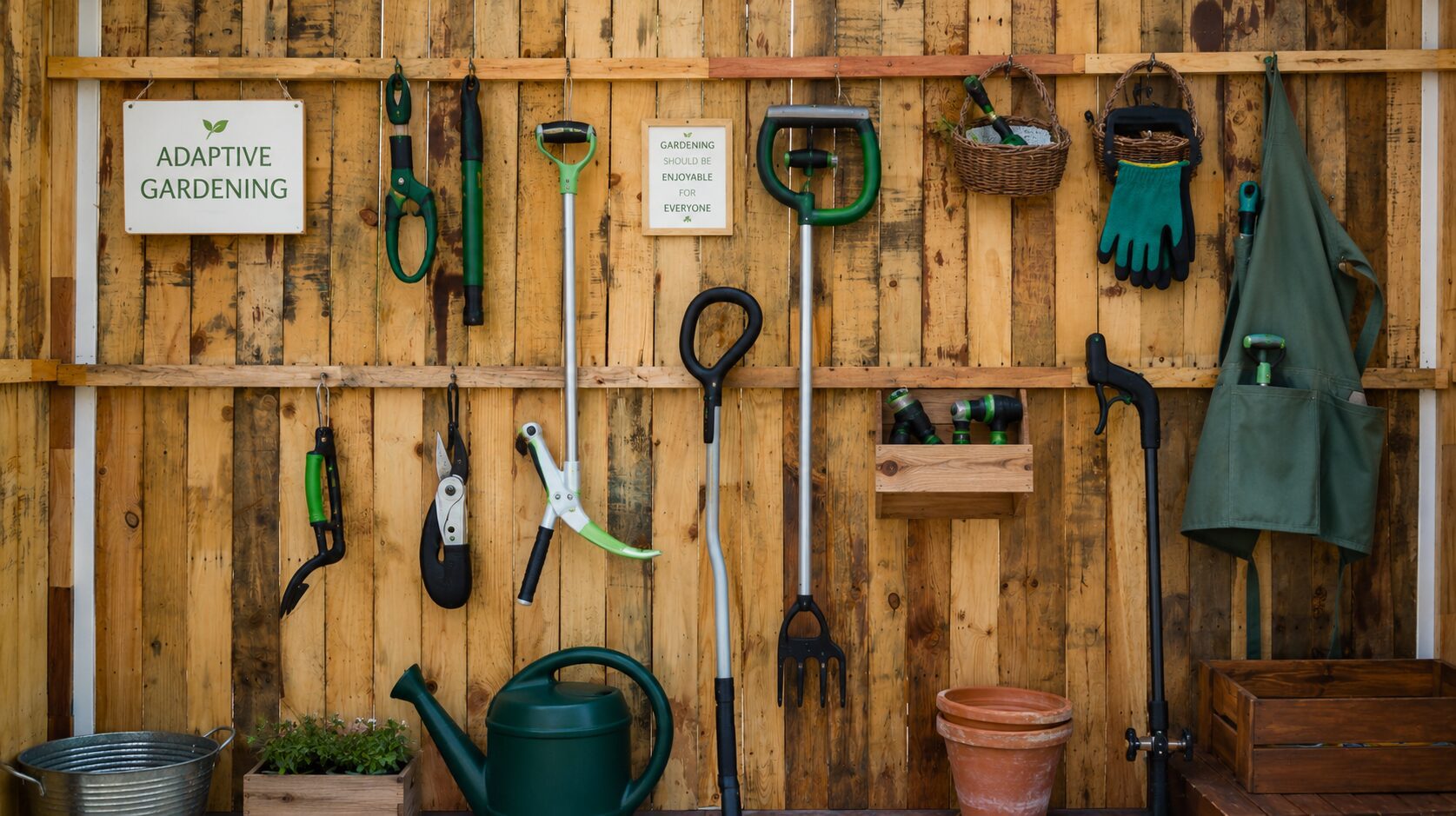
In many professional discussions, we distinguish between traditional gardening tools and adaptive tools. Traditional tools are the familiar basics: shovels, rakes, trowels, watering cans. Adaptive gardening tools are often thought of as specialized equipment designed for people with disabilities or mobility limitations.
But in practice, the distinction isn’t always so clear.
One of the key ideas Emilee emphasizes in her teaching is that every traditional gardening tool is adaptive when it’s used for the purpose it was designed for. Each tool is engineered with specific characteristics: blade shapes, handle angles, leverage points, that make certain tasks easier and safer.
When we use the right tool for the right task, we reduce strain on the body and increase efficiency. When we force a tool to do something it wasn’t designed for, we increase fatigue, risk injury, and shorten the lifespan of the tool itself.
In therapeutic horticulture and horticultural therapy practice, this understanding becomes especially important because participants often bring a wide range of physical abilities, energy levels, and comfort with tools.
Tools as Extensions of Human Ability
A helpful way to think about tools is through a broad definition:
A tool is any object, device, or system that extends human ability to accomplish a task more efficiently, effectively, or safely.
From this perspective, the purpose of a tool isn’t just to get work done. It’s to expand participation.
This shift in thinking helps practitioners move away from the idea that adaptive gardening requires expensive or highly specialized equipment. Instead, the focus becomes matching tools to people and tasks, adjusting small details to make activities more manageable.
Sometimes that means selecting a different tool altogether. Other times, it means adapting how the tool is used.
Common tool categories used in therapeutic horticulture programs:
| Tool Category | Examples | Primary Adaptive Benefit |
|---|---|---|
|
Hand tools |
Trowels, hand rakes, cultivators |
Fine motor engagement, seated use |
|
Long-handled toolsn |
Hoes, rakes, border spades |
Upright posture, reduced kneeling |
|
Watering tools |
Watering cans, hose wands, misters |
Graduated weight, bilateral use |
|
Gripping aids |
Foam handle wraps, strap gloves |
Supports limited hand strength |
|
Cutting tools |
Bypass pruners, ratchet pruners |
Low-force options, joint protection |
|
Container/raised bed tools |
Narrow trowels, soil scoops |
Accessible reach, precision |
Watering: A Simple Task That Reveals a Lot About Tool Design
Consider watering, one of the most common activities in therapeutic horticulture and horticultural therapy programs.
Where there are plants, there must be water. Whether you’re working with indoor container plants, tending raised beds, or supporting a bedside gardening activity, watering will always be part of the experience.
Yet watering tools vary widely, and the details matter more than we might expect.
Take watering cans. At first glance they seem interchangeable, but several design features affect how easy they are to use:
- Holding capacity determines the weight of the can when full. Smaller cans are easier to control for indoor plants, while larger cans reduce trips to the spigot in outdoor gardens. In therapeutic settings, practitioners often encourage participants to fill larger cans only partway so the weight remains manageable.
- Handle design influences grip and control. Some cans include a second handle that allows two-handed pouring, reducing strain on the wrist and improving stability.
- Spout shape and angle affect the flow of water. Long, narrow spouts allow precise watering in tight spaces, while wider spouts release water more quickly.
Even small design differences can change whether watering feels calm and satisfying, or frustrating and overwhelming.

Watering can features at a glance:
| Feature | Design Option | Best For |
|---|---|---|
|
Capacity |
Small (1-2L) |
Indoor plants, limited strength, precise control |
|
Capacity |
Large (6-9L) filled partway |
Outdoor beds, reducing trips to spigot |
|
Handle |
Single handle |
Standard grip strength |
|
Handle |
Dual handle |
Two-handed control, reduced wrist strain |
|
Spout |
Long, narrow |
Precision watering, tight spaces, fine motor tasks |
|
Spout |
Short, wide |
Quick watering, large areas |
|
Material |
Plastic |
Lightweight, ideal for low-strength participants |
|
Material |
Metal (galvanised/copper) |
Durable, heavier, suited to higher-strength users |
When practitioners understand these features, they can choose tools that match both the task and the participant’s comfort level.
Thinking About Energy, Not Just Ability
One of the most practical lenses Emilee encourages practitioners to use is the idea of energy efficiency, sometimes called energy conservation in occupational therapy and allied health contexts.
Gardening tasks often involve repetitive movements, lifting, gripping, and bending. When tools require excessive force or awkward positioning, participants may fatigue quickly, even if they are physically capable of completing the task.
Selecting ergonomic gardening tools that reduce resistance, leverage weight effectively, and support natural body positioning helps conserve energy and prolong engagement.
For example, when digging in compacted soil, the shape of a shovel blade makes a significant difference. Narrow, sharp blades cut through soil with less resistance than wide blades, which require more force to break the surface. Matching the blade design to soil conditions reduces strain and makes the task feel more achievable.
In therapeutic horticulture, these adjustments aren’t just about efficiency. They’re about maintaining confidence and enjoyment in the activity.
Long-Handled Tools and Expanding Access in the Therapeutic Garden
Long-handled tools open up powerful possibilities in therapeutic horticulture and accessible garden design.
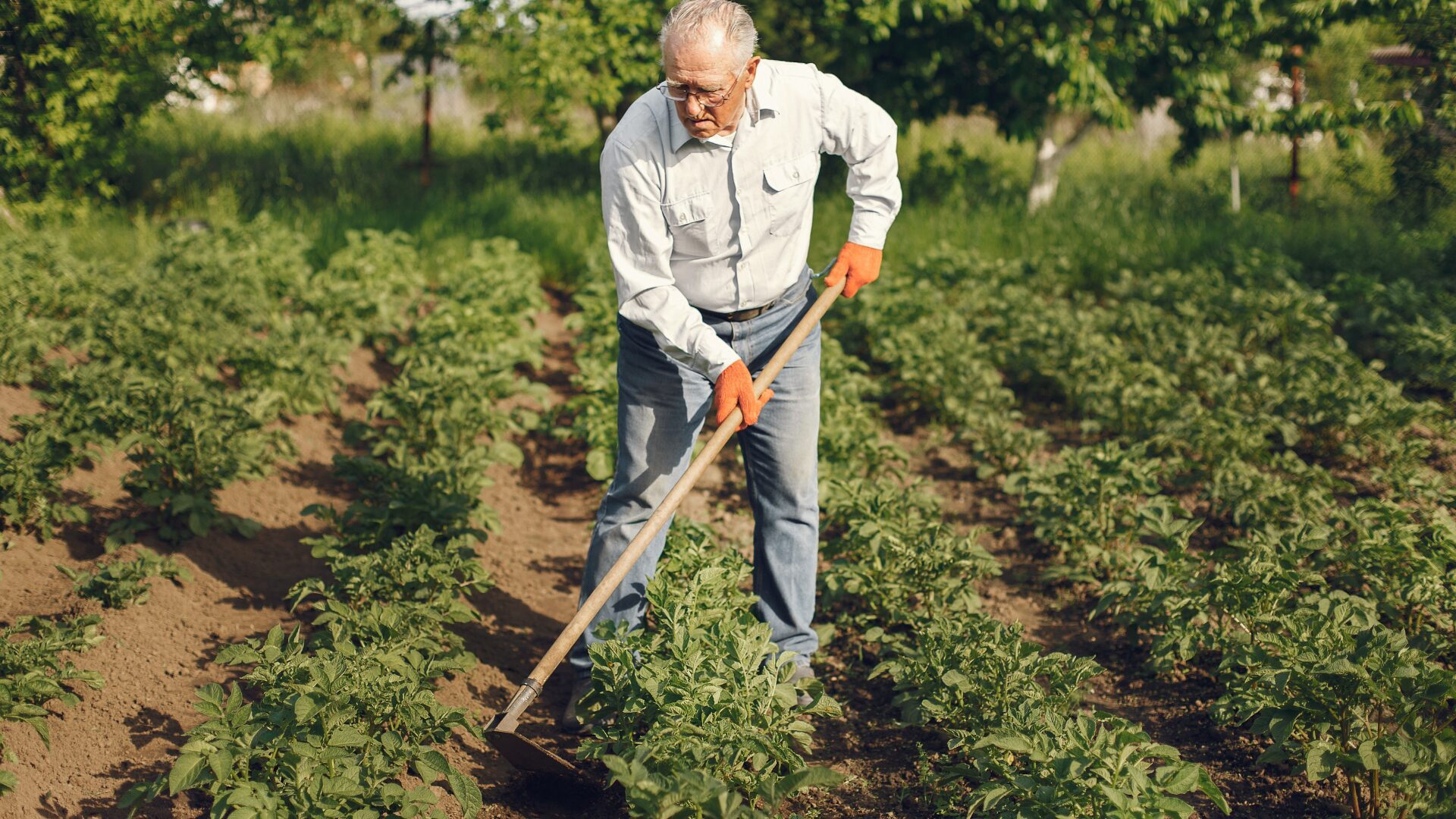
They allow participants to work from an upright position, reducing the need to kneel or crouch. At the same time, they can empower participants who are seated, including wheelchair users, to reach deeper into garden beds without excessive stretching.
When we begin to view tools through this lens, creativity becomes part of the process. A tool’s traditional use doesn’t limit its potential. Instead, thoughtful selection and imaginative application allow practitioners to support participation across a wide range of abilities.
In many cases, it isn’t the tools themselves that limit accessibility. It’s how we think about using them.
Simple Adaptations That Make a Big Difference
Many adaptive tool modifications are surprisingly simple.
Gripping aids, for example, can dramatically improve comfort for participants with limited hand strength or joint pain, common among older adults, people with arthritis, or those in rehabilitation. Adding foam or padded material to tool handles increases surface area and reduces pressure on the hands.
Strap systems and specialized gloves can also secure tools to the hand, reducing the need for constant gripping. For some participants, this small adjustment transforms a difficult task into one they can perform independently and more comfortably.
Even everyday tools outside the garden can be adapted. For instance, adding leverage handles to water spigots or shovels can reduce the wrist rotation required to turn them on and off.
These changes may seem minor, but they reflect a broader principle of therapeutic horticulture practice:
Small design choices can significantly influence participation and reduce micro-impacts on the body.
When Tools Support Confidence
Another powerful outcome of thoughtful tool selection is the restoration of confidence.
Participants who struggle to grip tools, control water flow, or manage heavy equipment may become discouraged quickly. When tools are adapted or selected intentionally, participants can focus on the experience of gardening rather than the difficulty of holding on.
This shift, from frustration to confidence, can change the entire tone of a horticultural therapy session.
It also reinforces the therapeutic horticulture principle that gardens are not simply places where work happens. They are places where people explore and build relationships with plants, with each other, and with their own abilities.
Bridging Accessible Garden Design and Daily Practice
Restorative garden design often focuses on layout, plant selection, and sensory qualities of space. Those elements are essential.
But what happens at the potting bench, at the watering station, or along the garden path ultimately determines whether participants can engage comfortably and meaningfully.
The adaptive gardening tools we bring into those spaces, how we introduce them, maintain them, and adapt them, shape the everyday experience of therapeutic horticulture.
When tools are treated as partners in the process rather than afterthoughts, restorative spaces become more than beautiful environments. They become places where people can truly participate.
Continuing to Build Practical Skills
For many practitioners, tool selection and tool use are areas where formal training is surprisingly limited. Many of us learn through experience, experimenting, adapting, and gradually discovering what works best for different participants and settings.
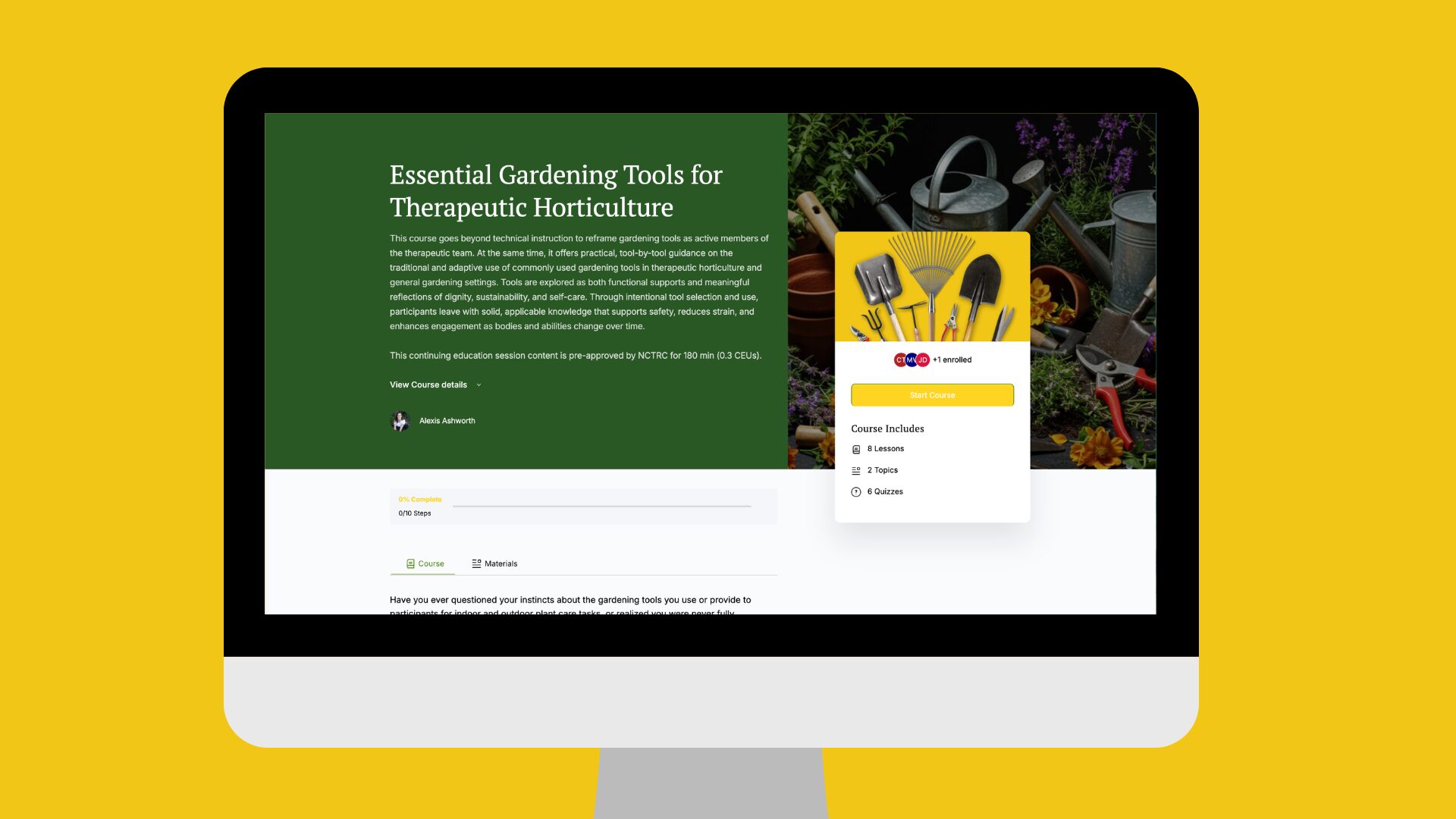
To help fill that gap, Emilee has developed a mini-course called Essential Gardening Tools for Therapeutic Horticulture Programs that takes a deeper look at the tools most commonly used in therapeutic horticulture programs, the horticulture industry, and by home gardeners.
Drawing on more than 25 years in professional horticulture and over 15 years developing therapeutic horticulture and horticultural therapy programs, Emilee walks practitioners through the design, purpose, and practical use of gardening tools used in both indoor and outdoor plant care tasks.
In the course, you’ll gain:
- A professional-level understanding of the correct uses, benefits, and adaptive features of 135 traditional and adaptive gardening tools
- Practical insight into how tool design influences energy use, comfort, and participant engagement
- Strategies for selecting and introducing tools that support accessible participation across a wide range of abilities
- A 72-page digital tool manual with full-color photos and descriptions to support learning and serve as a long-term reference
The course is designed for anyone who wants to learn how to select and use garden tools that accommodate a wide range of their own gardening needs, as well as those of the people they work with or care for, especially therapeutic horticulture practitioners, horticultural therapists, recreational therapists, and allied health professionals who want realistic, ready-to-use strategies that support both participant engagement and practitioner sustainability.
If tools have ever felt like the missing piece in your programming, or if you’ve simply never had the opportunity to learn about them in a structured way, you can learn more about the course on our courses overview page: https://rootinnature.ca/courses-overview/
When we begin to see tools not just as equipment but as partners in the work, restorative spaces become more than beautiful gardens. They become places where people can truly participate.
Frequently Asked Questions
What are adaptive gardening tools?
Adaptive gardening tools are tools that have been designed or modified to support people with reduced grip strength, limited mobility, chronic pain, or other physical challenges. They include features like extended handles, padded grips, ratchet mechanisms, strap attachments, and lightweight materials. In therapeutic horticulture and horticultural therapy, both purpose-built adaptive tools and thoughtfully selected traditional tools serve this function.
How do I choose gardening tools for a therapeutic horticulture program?
Start by assessing the tasks your participants will perform and their range of physical abilities. Consider tool weight, handle design, grip requirements, and leverage. Look for tools that match the task they were designed for. Using the right tool for the right job reduces fatigue and strain. Resources like Emilee Weaver's Essential Gardening Tools for Therapeutic Horticulture Programs offer structured guidance on evaluating 135 tools across both indoor and outdoor settings.
What is the difference between therapeutic horticulture and horticultural therapy?
Horticultural therapy is a professionally credentialed practice in which a registered horticultural therapist (HTR) uses plant-based activities as goal-directed interventions in clinical or rehabilitative settings. Therapeutic horticulture is a broader term that refers to using plants and gardening to support wellbeing, often delivered by practitioners from a range of backgrounds including recreational therapy, occupational therapy, social work, and education. Both fields benefit from thoughtful, adaptive tool selection.
What tools are most commonly used in horticultural therapy programs?
Common tools include hand trowels, cultivators, watering cans, hose wands, long-handled hoes and rakes, bypass pruners, and potting scoops. Gripping aids, padded handle wraps, and ratchet-style pruners are frequently used adaptive modifications. The best choice always depends on the participant's abilities, the task at hand, and the setting: indoor, outdoor, raised bed, or container gardening.
What are ergonomic gardening tools?
Ergonomic gardening tools are designed to reduce physical strain by supporting natural body positioning, minimising repetitive stress, and reducing the force required for common tasks. Features include angled handles, cushioned grips, extended reach, and lightweight construction. In therapeutic horticulture, ergonomic tool selection is closely linked to energy conservation, supporting participants to engage longer and more comfortably.
How can I adapt standard garden tools for participants with limited grip strength?
Simple adaptations include wrapping handles with foam pipe insulation or self-adhesive grip tape, attaching hook-and-loop strap systems to secure the tool to the hand, and selecting tools with larger-diameter handles. For cutting tasks, ratchet-style pruners significantly reduce the force needed per cut. These low-cost modifications can make a substantial difference in participation and independence.