







Introduction to Therapeutic Horticulture

Your First Step into Therapeutic Horticulture

You know plants and nature can support well-being, but you may be wondering how to use them safely, intentionally, and professionally in your own work.

Introduction to Therapeutic Horticulture gives you a clear, practical starting point. This self-paced online course helps recreational therapists, activity directors, educators, mental health professionals, allied health professionals, and aspiring practitioners begin building the knowledge and confidence to use plant and nature-based approaches in meaningful, goal-oriented ways.

No prior horticulture experience is required.

Course Description

Introduction to Therapeutic Horticulture is a foundational, self-paced online course for professionals and aspiring practitioners who want to understand the field of therapeutic horticulture and begin exploring how plant- and nature-based approaches may fit within their work.

Through engaging, easy-to-follow lessons taught by Emilee Weaver and Katie McGillivray, HTR, you’ll build a practical understanding of the principles, evidence, ethics, and professional values that support safe and inclusive practice. You’ll also explore common populations and program settings, facilitation considerations, and introductory horticultural knowledge, including ways to adapt tools, activities, and techniques for different participant needs.

This course is also the prerequisite for Root in Nature’s Advanced Therapeutic Horticulture Skills course, making it a helpful first step for learners who want to continue developing their therapeutic horticulture practice.

This course is designed as a starting point. You do not need to be a horticulture expert, an experienced gardener, or already working in therapeutic horticulture to begin. You’ll be guided through the core concepts step by step, with practical examples that help you understand how this approach can fit within different professional roles and care settings.

Course Fee & What's Included

Course Fee: CAD $295
Course Manual (optional): CAD $30

What You’ll Receive:

Your registration gives you everything you need to begin building a strong foundation in therapeutic horticulture, including:

  • Seven video-based lessons with 68 focused topics 
  • Practical resources to support your learning and help you implement course concepts
  • Lifetime access 
  • A completion certificate & digital badge 
  • Eligibility for CE credits
  • Bonus: Six months of free access to the GrowTH Network for non-members, our professional support platform with an activity database, resources, peer connection and ongoing learning opportunities. Current GrowTH Network members receive a 20% course discount through their membership.

The course includes eight hours of video lessons, as well as quizzes and resource materials. You will not be required to attend any live calls during this course—all content is pre-recorded and self-paced.

  • Pre-approved by the National Council for Therapeutic Recreation Certification – NCTRC for 12 hours
  • Pre-approved by the Activity Professionals National Credentialing Center – APNCC for 12 hours
  • Approved by the Canadian Horticultural Therapy Association – CHTA for 0.3 points per 40 contact hours of instruction
  • Accepted by Master Gardener programs meets the criteria for continuing education in many U.S. and Canadian programs

After you purchase, simply sign in to your account at the top right corner of the website and you’ll find the course and manual (if purchased) under Courses → My Courses.

You’ll have lifetime access, so you can move through the lessons at your own pace and revisit them anytime. 

The 120-page course manual is a comprehensive PDF that captures all the main points from the course in one place. It’s designed to:

  • Consolidate the key concepts so you can focus on learning instead of taking extensive notes
  • Serve as a lasting reference, like a textbook you can return to anytime
  • Support open-book quiz completion 
  • Provide a quick refresher on foundational knowledge as you move into more advanced or practice-based training
  • Provide a glossary of 130+ TH Terms

While not required, many students find the manual to be a helpful resource they continue using well beyond the course.

What Our Learners Are Saying

Learn from Experienced Instructors

Emilee Weaver

With over 25 years in professional horticulture and 15 years dedicated to developing therapeutic horticulture and horticultural therapy programs, Emilee Weaver is a respected leader, educator, and practitioner in the field. She co-authored The Profession and Practice of Horticultural Therapy (2019), one of the first comprehensive textbooks in the discipline, and served as lead instructor and content developer for university-based therapeutic horticulture certificate programs in the U.S. Emilee’s work has spanned clinical, community, and educational settings, with a focus on the intersection of horticulture and mental health. Most recently, she has helped expand therapeutic horticulture internationally, partnering with Ukrainian and Armenian botanical gardens and clinicians supporting communities affected by war. Her lifelong love of plants began in the fern-filled forests of New Hampshire and was nurtured by her grandmother’s influence. When she’s not teaching or consulting, Emilee can be found tending her garden, chatting with her tortoises, keeping her cats out of mischief, and spending time with family and friends who continue to inspire her journey.

Katie McGillivray, HTR

Katie McGillivray is a Registered Horticultural Therapist (HTR) and member of the Canadian Horticultural Therapy Association. Since 2014, she has supported therapeutic horticulture projects and programs for a wide range of populations, guided by an asset-based, client-centered, and strengths-focused approach. Katie holds a certificate in horticultural therapy from Ann Kent and completed academic studies in counselling, horticulture, agriculture, psychology, and research. Her work often connects therapeutic horticulture with community food security and food justice, areas where she continues to inspire meaningful, hands-on engagement with nature. Beyond her professional practice, Katie is an enthusiastic home cook and avid paddleboarder who finds joy in cultivating both gardens and community.

Featured Guest Speakers

Chadwick Lewis

Owner & General Manager, Urban Fresh Produce

Lynn Leach, HTR

Horticultural Therapist & Landscape Designer, Bird’s Foot Design Studio

Matthew Johnson

Owner/Operator, Three Rabbit Farms

What You'll Gain

This course will help you:

Course Structure

Course Introduction

Get oriented to the course, meet your instructors, and learn more about how the course manual can assist your learning journey.

Historical and Theoretical Foundations of TH

Explore the roots of TH: what it is, where it originated, and the research and theories that inform and support its effectiveness. Learn how universal design principles and therapeutic gardens shape practice, consider ethical dimensions, and explore real-world examples of programs in action.

Fundamentals of TH

Discover the populations, activity types, and settings where therapeutic horticulture is practiced. Examine the core domains of wellness it supports, compare program models, consider the roles of facilitators, and hear stories from participants themselves.

TH Program Development

Build an understanding of how programs are designed and sustained, from community engagement and goal-setting to documentation, income and employment models. Includes practical case studies.

TH Activity Facilitation

Learn best practices for planning and leading sessions, safety considerations, and using nature metaphors. Uncover the power of adaptive tools, techniques and developing intentional goal-driven therapeutic environments.

Horticulture Foundations & Concepts

Gain foundational plant knowledge, from soil and seeds to plant care, safety, and plant toxicity. Learn how sensory and culturally significant plants can be incorporated into practice, and how adaptive approaches make horticulture accessible for all.

Download a Course Outline & Preview

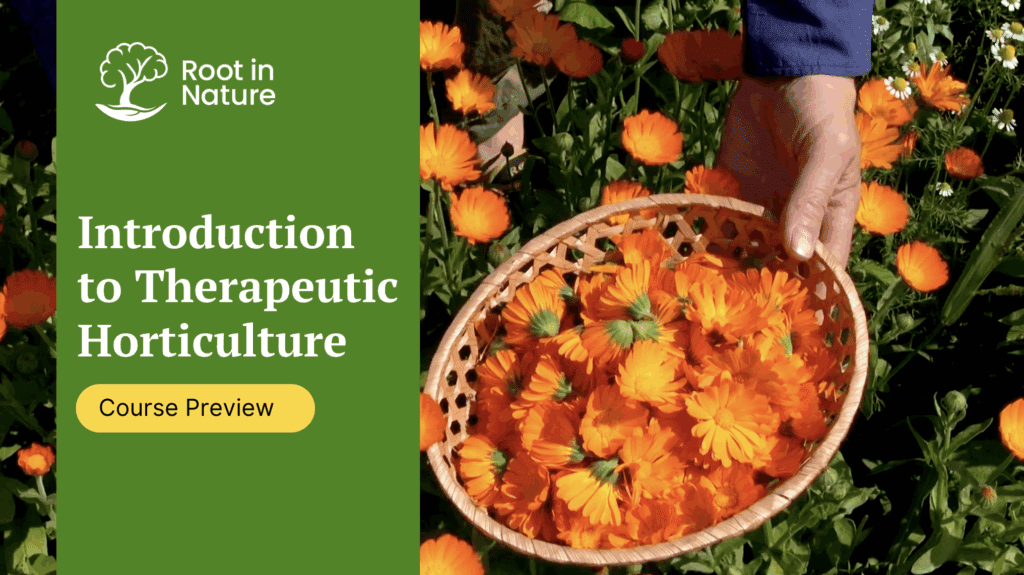
Get a glimpse inside the course with this 13-minute preview video. It brings together a series of clips from the lessons, giving you a feel for the learning style, topics covered, and the supportive approach that guides you through the foundations of therapeutic horticulture. A detailed course outline is also included.

FAQs

Yes. After this course, you can continue in two main ways:

1. Certificate pathway 
This course is the prerequisite for our Advanced Therapeutic Horticulture Skills course. By completing this course, you can earn an Advanced Therapeutic Horticulture Certificate which recognizes comprehensive training in foundational knowledge, facilitation skills, and program development.

2. Standalone professional development + mini-courses
We offer thematic learning opportunities (e.g., Supporting Emotional Resilience and Action in a Changing Climate) and a growing suite of shorter courses on specific skills and practice themes.

For current offerings, waitlists, and launch dates, please view our Courses Overview page, the Root Beat newsletter, and social channels.

This course provides foundational knowledge, but it is not designed to prepare you to independently develop or facilitate therapeutic horticulture programs or activities.

Upon completion, you may describe yourself as a Therapeutic Horticulture Ally, with an understanding of:

  • the populations TH practitioners serve
  • the settings in which programs are delivered
  • how TH supports a range of outcomes across diverse environments

If your goal is to practice therapeutic horticulture (facilitate and/or develop programs), we recommend continuing on to the Advanced Therapeutic Horticulture Skills Course.

No. This course does not certify you as a Horticultural Therapist (HT).

This course provides training in therapeutic horticulture foundations. Even the Advanced Therapeutic Horticulture Certificate is designed to prepare learners to practice therapeutic horticulture—not horticultural therapy.

Horticultural therapy is a distinct clinical profession with its own training pathways and requirements; this course focuses on therapeutic horticulture as an evidence-informed practice approach.

Yes—please contact us at courses@rootinnature.ca for group discount codes.

Best Ottawa Business (BOBS) Award Winner

Root in Nature was recognized for Best Performance in Social Entrepreneurship by the Ottawa Board of Trade and the Ottawa Business Journal.

Coralus Venture

Root in Nature is grateful to be selected as one of the Ventures working on the World’s To-Do List by Coralus Activators. We receive interest-free funding, connections and relationships to grow our impact.