

Integrator
Branching Out
You’re an experienced professional looking to expand your toolkit – not start over. You’ve seen the value of nature in healing, and now you want to integrate therapeutic horticulture into your existing scope of care. This path is designed to help you apply plant-based practices in meaningful, measurable, and evidence-informed ways, all without disrupting your current role or credentials.
As a health or human services professional, you’ve likely seen how meaningful progress happens through connection—between people, and between people and the spaces that support their healing.
Whether you’ve already introduced plant-based activities into your practice, or you’re just beginning to explore how therapeutic horticulture (TH) could align with your clinical or community work, this path is here to help you grow with intention.
You’re not starting from scratch—you’re branching out.



Understanding Your Path: HT vs. TH
Before diving into next steps, it’s important to understand how therapeutic horticulture (TH) differs from horticultural therapy (HT)—and why that distinction matters for how you integrate this work into your role.
We’ve created a short video to walk you through the differences, so you can move forward with clarity, confidence, and alignment to your scope of practice.
We created a short video to help answer exactly that.

Horticultural Therapy (HT)
is a clinical practice facilitated by a registered horticultural therapist. It involves structured, goal-oriented activities designed to achieve specific therapeutic outcomes within an established treatment or rehabilitation plan.
Therapeutic Horticulture (TH)
TH on the other hand, is a more community-based practice that can be facilitated by non-clinical professionals and volunteers that have received specialized training in TH. TH utilizes nature-based activities to support broader goals that address human health and wellbeing in a variety of settings, without the need for clinical oversight. However, many clinical professionals choose to combine their clinical education and specialized TH training to achieve high-quality, clinically significant treatment outcomes.
As the definitions above explain, you don’t have to become a registered horticultural therapist to bring evidence-based, nature-connected interventions into your work.
Therapeutic horticulture offers a flexible, ethically grounded way to enhance your professional practice while remaining aligned with your existing role and credentials. At Root in Nature, we recognize that many working professionals may lack the time, interest, or financial capacity to pursue college-level horticultural therapy programs—especially when much of the content overlaps with their prior education.
That’s why we’re committed to reducing barriers to therapeutic horticulture education by making it more accessible and affordable for allied health professionals who bring valuable insight and experience from their respective fields.
At Root in Nature, we offer education and support in therapeutic horticulture, not clinical horticultural therapy. That said, the GrowTH Network is designed to be a welcoming and valuable resource for both TH and HT practitioners, because regardless of title or setting, we share common ground in our values, goals, activities, and the importance of community.
If, after watching the video, you feel that HT is a better fit for your path, you can explore formalized training through organizations like the American and Canadian Horticultural Therapy Associations. At Root in Nature, we’re here to support you in whichever direction feels right for you.


Build a Foundation with the Intro to TH Course
You already know how to support clients’ health, function, and quality of life. Now you’re ready to expand your toolkit – with therapeutic horticulture as a natural, meaningful addition to the care you provide.
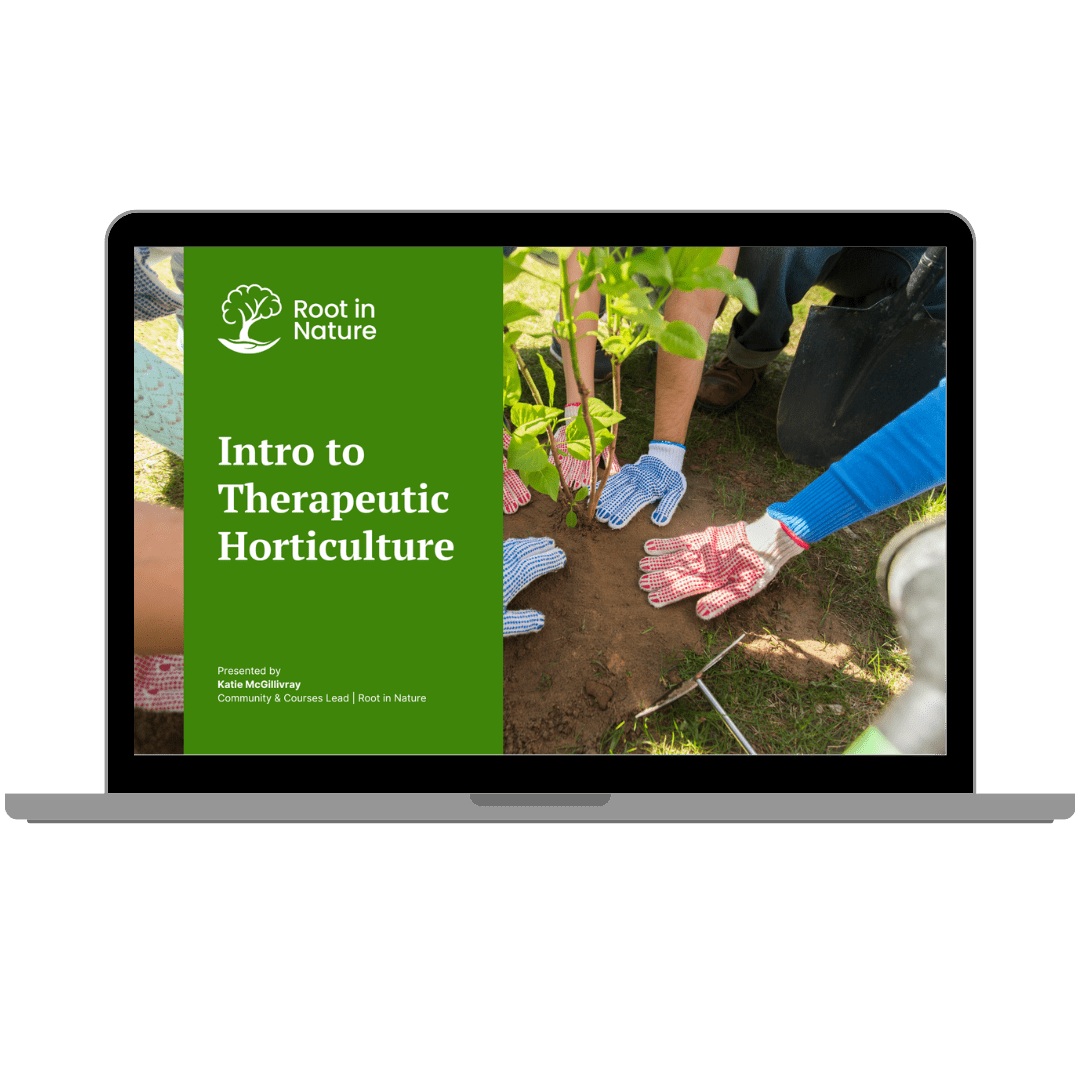
The Intro to Therapeutic Horticulture course is your structured, self-paced entry point into this growing field. Designed specifically for allied health professionals and care practitioners, this course will show you how to safely, ethically, and effectively integrate nature-based activities into your setting, whether clinical, community, educational, or residential.
What You'll Learn
- The history and foundational values and principles of therapeutic horticulture
- How to evaluate and enhance the viability, safety, and accessibility of indoor and outdoor spaces used for therapeutic programming
- How to plan, design, and adapt plant-based activities that support the treatment goals of individuals of all abilities
- Participant and program assessment/evaluation practices commonly used within the TH field
- Basic horticultural/gardening skills required to sustain indoor and outdoor plants/gardens
- How to craft a TH program proposal that secures support from site administrators and funders.
- Real-world examples of how others are implementing TH in healthcare and community care
You’ll also gain insight into how TH complements existing modalities – such as occupational therapy, recreation therapy, mental health support, or elder care – without requiring a major program overhaul.
Looking to bring therapeutic horticulture to your whole team?
Check out our Team Training Program designed to help organizations implement TH confidently and consistently across staff roles.
Join the GrowTH Network
As an allied health professional, you’re not just learning something new—you’re layering therapeutic horticulture into an already dynamic care practice. That takes more than a course. It takes community, continued learning, and resources you can trust.
That’s what the GrowTH Network offers.
This professional ecosystem is designed to help you confidently implement, adapt, and grow your therapeutic horticulture practice with support, while saving you time, energy, and expense at every stage.
Whether you’re looking for practical tools, a meaningful specialization that sets you apart, ways to support your own well-being/avoid burnout, or connection with others integrating nature into healthcare—you’ll find it here. The GrowTH Network serves as the bridge between what you’ve learned and how you’ll apply it in real-world practice.

Inside the GrowTH Network

Activity Database
A searchable collection of therapeutic horticulture activities categorized by population, setting, and therapeutic goal – ready to implement or adapt.

Resource Library
A robust curated collection of practical, customizable tools to support your programs.

Monthly Practitioner Support Calls
Live, guided conversations with an experienced TH/HT professional and fellow practitioners to share challenges, ideas, and encouragement.

Online Events with Guest Experts
Ongoing professional development opportunities tailored to this field and your real-world questions.

Evidence at Your Fingertips
As a health professional, you understand the importance of clinical reasoning, measurable outcomes, and evidence-informed practice. If you’re planning to bring therapeutic horticulture into your workplace or care model, you’ll likely be asked: Does it really work?
The Root in Nature Research Database is designed to help you answer that question with clarity and confidence.
What You’ll Find
- Peer-reviewed studies highlighting the therapeutic impact of nature-based programs across physical, mental, and social domains
- Searchable tags by population (e.g., dementia, youth, veterans) and setting (e.g., long-term care, rehab, community health)
- Summarized insights that help you integrate evidence into your planning, documentation, or funding proposals
- Examples and data that align with your clinical or organizational goals—without requiring hours of searching
Whether you’re preparing to pitch a new program, soliciting program funding, looking to meet documentation standards, or simply want to stay aligned with best practices, the database gives you the backup you need to move forward with confidence.
Stay Connected
Subscribe to our newsletter for the latest research, practical strategies, community features and events.
Follow us on Instagram, YouTube and Linkedin for resource giveaways, TH in action and seasonal inspiration.
Explore our blog for fresh insights, deeper dives on topics and real-life stories to inspire your TH practice.

Join the Community
Benefits for Clients
Benefits for Clients
Practitioners can benefit from using plants and nature in their therapeutic approach in several ways:
- Enhancing the environment: Plants and nature create a calming and relaxing environment that can promote wellness and enhance the overall atmosphere of a therapy session.
- Reducing stress: Exposure to plants and nature has been shown to reduce stress and anxiety levels, which is beneficial for individuals who are experiencing mental health conditions or chronic illnesses.
- Improving physical health: Spending time in nature and around plants can promote physical activity and exercise. Recreation therapists can incorporate therapeutic horticulture activities into their therapy sessions to promote physical health.
- Boosting mood: Being in nature and around plants can boost mood and help individuals feel more positive and optimistic. This can be especially helpful for individuals who are experiencing depression or other mood disorders.
- Promoting social connections: Group therapeutic horticulture sessions can provide opportunities for social interaction and connection, as well as promote bonding and create a sense of community.
Benefits for Practitioners
Benefits for Practitioners
Practitioners such as recreation therapists may benefit from taking therapeutic horticulture training for several reasons:
- Specialized knowledge: Root in Nature’s training program provides specialized knowledge and skills related to using plants, gardening, and nature as therapeutic tools. This can help recreation therapists better understand the therapeutic benefits of horticulture and how to effectively incorporate it into their therapy sessions.
- Professional development: Training in therapeutic horticulture can be a valuable form of professional development for practitioners. It can enhance their skills and knowledge, making them more effective in their role as a therapist.
- Expanded therapy options: With therapeutic horticulture training, recreation therapists can expand the range of therapy options they can offer their clients. Incorporating plants and nature into their sessions can provide clients with unique and effective therapeutic experiences.
- Improved client outcomes: Horticultural therapy has been shown to be effective in improving a range of outcomes for clients, including mental health, physical health, and overall quality of life. By taking Root in Nature’s training, recreation therapists can learn how to effectively use horticulture to improve their clients' outcomes.