“It started with a few plants on a windowsill.”
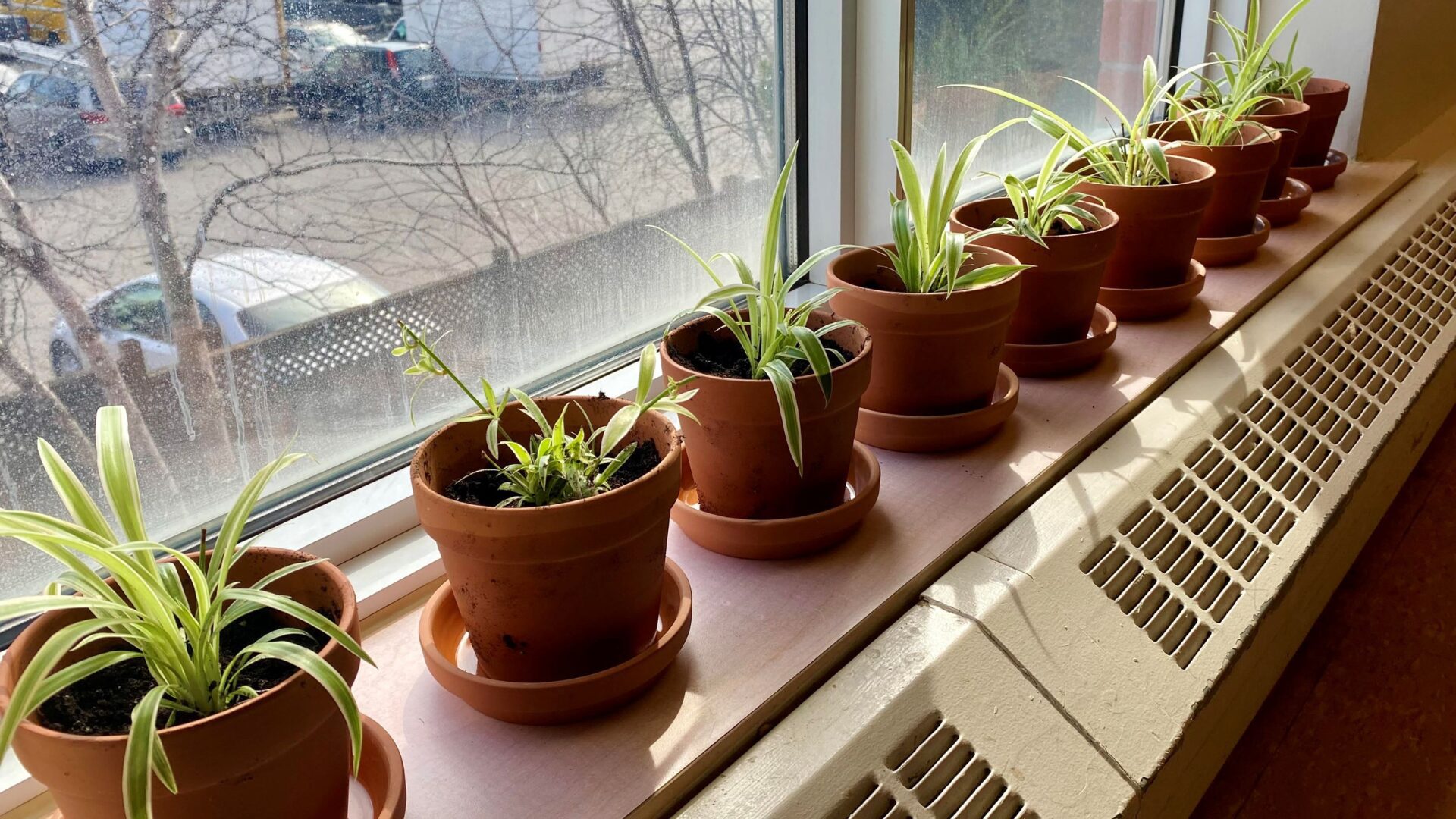
That’s how Matthew Harvey describes the early beginnings of implementing Therapeutic Horticulture within his recreation practice. What began as decorative elements on a windowsill soon became a way to bring people together.
Matthew saw an opportunity to meaningfully engage with the residents by inviting them to a weekly group program to care for the windowsill plants. Each resident brought their own unique experience; some would comment on new growth, while others would gently clear away dead leaves and water the soil. Participants quickly began to open up and share memories about gardens and plants they once cared for.
Over time, those small moments became something more integrated into the comprehensive recreation program within the long-term care community.
Matthew works as an Activation Aide within Sienna Senior Living, where Therapeutic Horticulture has become a meaningful part of life within the community and recreation programming. His approach reflects something many practitioners discover over time: the benefits of connecting with nature can begin with something as small as a humble houseplant.
Table of Contents
Bringing Together Horticulture and Therapeutic Recreation
Before working in long-term care, Matthew spent eight years working for a small gardening company. That background gave him a strong understanding of plants and garden environments, but it was through studying Recreation Therapy that he began seeing how deeply plants could support connection and wellbeing.
Like many practitioners in long-term care, Matthew recognized the value of creating opportunities that feel purposeful, familiar, sensory-rich, and adaptable to the uniqueness of each resident.
Plants offered all of that.
Rather than viewing gardening simply as an activity, he began exploring how Therapeutic Horticulture could become part of the culture of the community itself, woven into everyday routines, conversations, and shared experiences.
Why Therapeutic Horticulture Resonates in Long-Term Care
Therapeutic Horticulture can be especially meaningful in long-term care settings because plants naturally invite participation at many different levels.
Some residents may actively plant, prune, or water. Others may prefer quieter forms of engagement, such as observing growth, smelling herbs, touching leaves, or relaxing within a garden environment.
In long-term care communities, residents bring diverse physical, cognitive, emotional, and sensory strengths and areas for support. Therapeutic Horticulture offers opportunities that honours individual abilities, preferences, and approaches to participation.
Plants also connect strongly to memory and identity.
For many people living in long-term care, gardening was once part of daily life – something tied to home, family, routine, culture, and self-care. Interacting with plants can reconnect residents to those experiences in ways that feel natural and authentic.
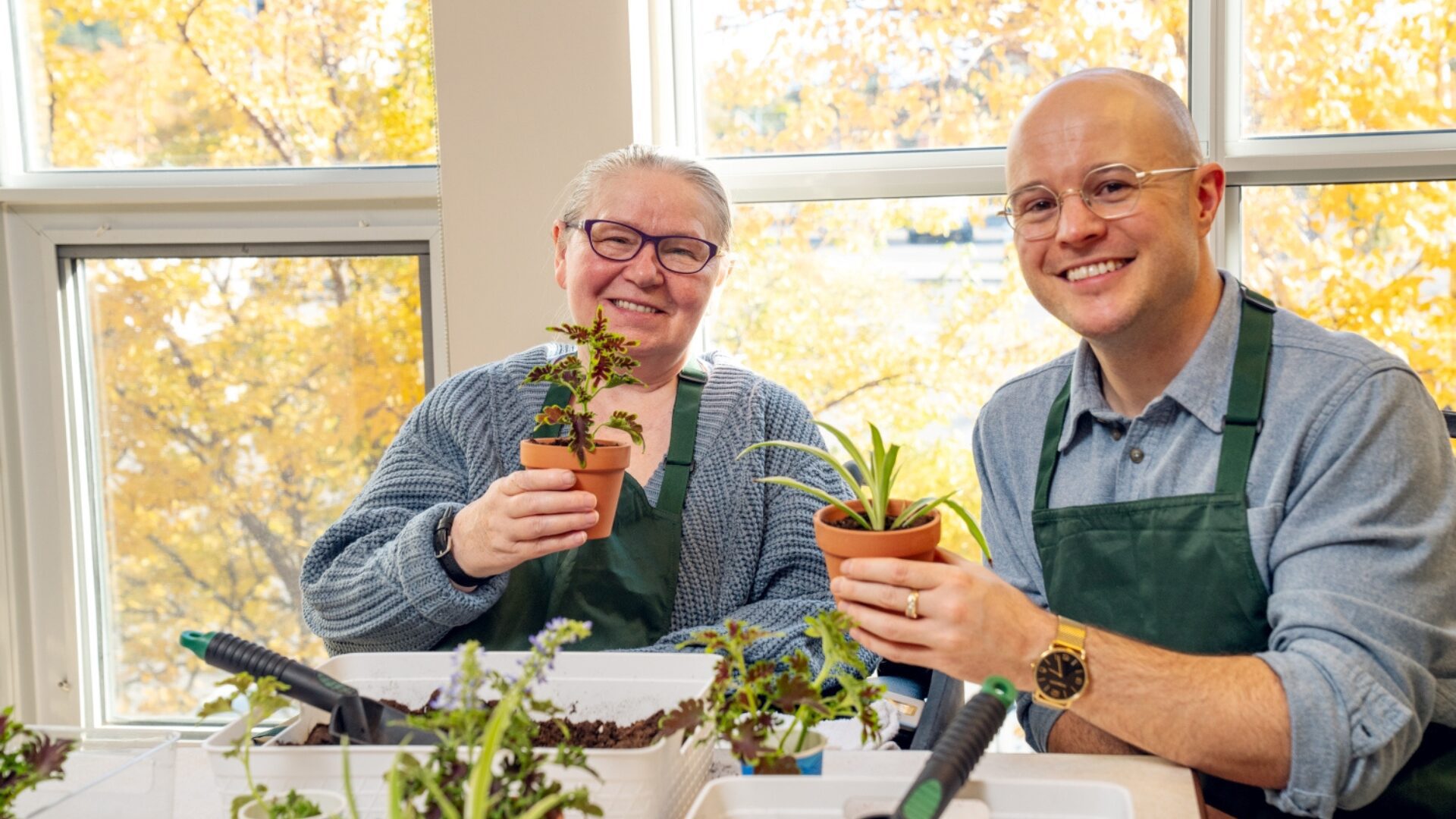
A weekly propagation session at Sienna Living
Weaving Therapeutic Horticulture Into Recreation Programming
Over time, Therapeutic Horticulture strengthened and diversified the recreation calendar.
A weekly plant-care group program grew into a variety of plant and nature-based experiences throughout the year:
- sensory exploration of plants and garden strolls
- nature-based art
- herbal tea socials
- propagation and seed starting series
- flower arranging
- gift making
- cooking and baking programs
Rather than focusing on creating “perfect” gardens or highly intensive horticulture programs, the emphasis was on creating opportunities for engagement with plants that met residents where they were.
Empowering Residents Through Adaptable Engagement
One of Therapeutic Horticulture’s greatest strengths is its adaptability.
Within long-term care settings, participation may look very different from one resident to another. Some individuals may enjoy physically active gardening tasks, while others may engage primarily through conversation or sensory exploration.
Therapeutic Horticulture allows practitioners to scale activities in ways that support different strengths, comfort levels, and abilities. Matthew describes his approach as strengths-based, focusing on creating opportunities for people of all abilities to participate.
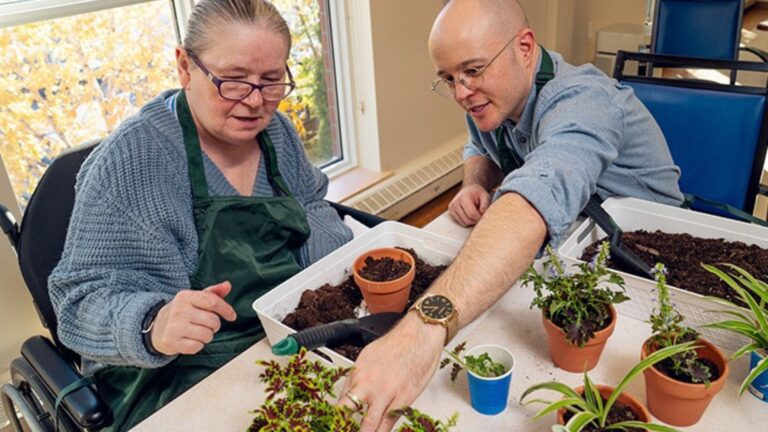
For example, a propagation program may have one resident filling pots with soil while another prepares holes for transplants. At the same program, one resident may assist with watering and deadheading, while another enjoys the social connection and sensory experience of being surrounded by people and plants.
Considering each resident’s strengths and preferences supports more inclusive, person-centred engagement by adapting participation to individual abilities and interests.
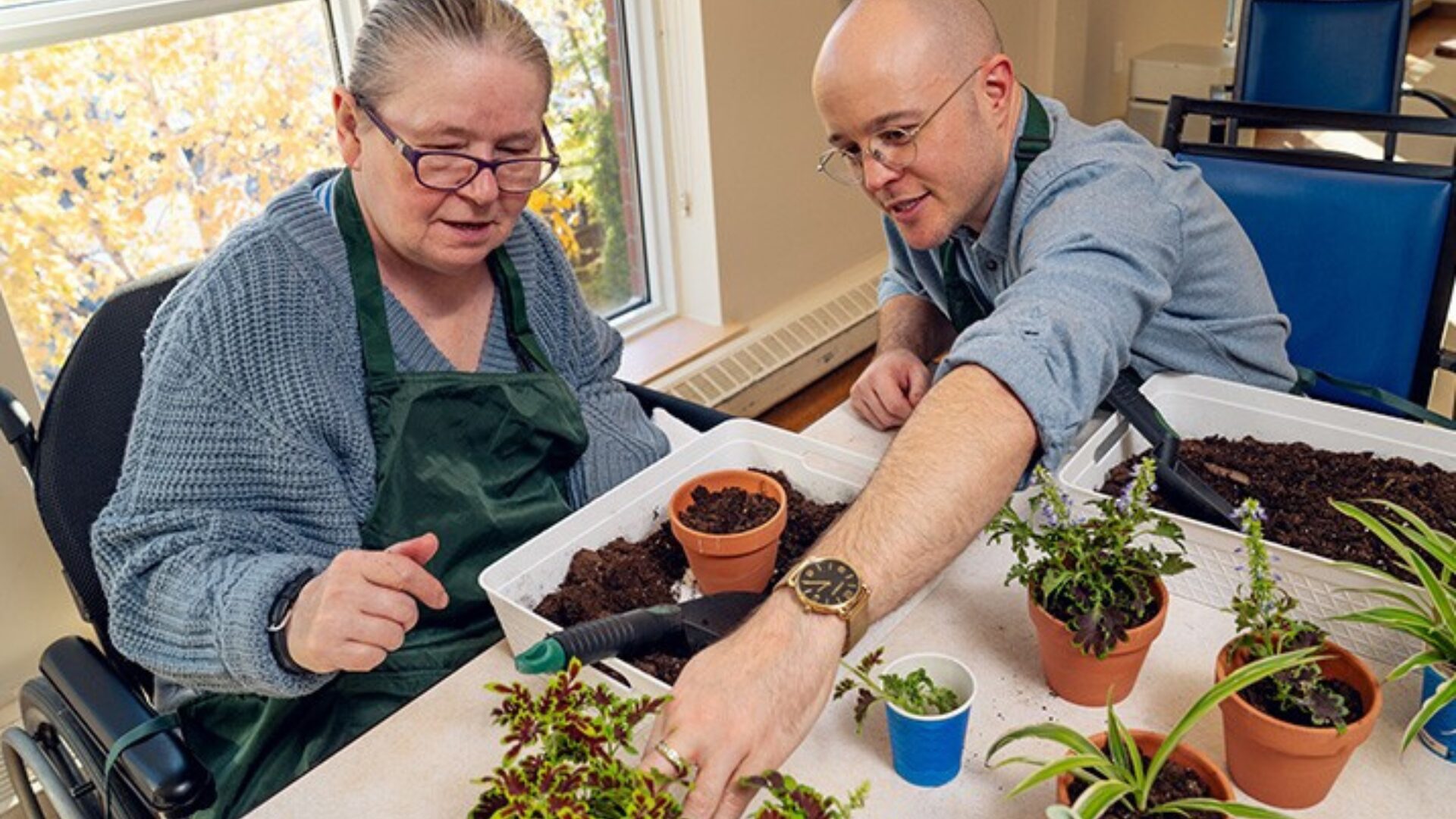
A weekly propagation session at Sienna Senior Living
Many of the propagated plants – including Begonia ricinifolia ‘Immense’, spider plants, and scented geraniums (shown below) – will eventually be transplanted into the community garden, adding beauty and enjoyment for all.
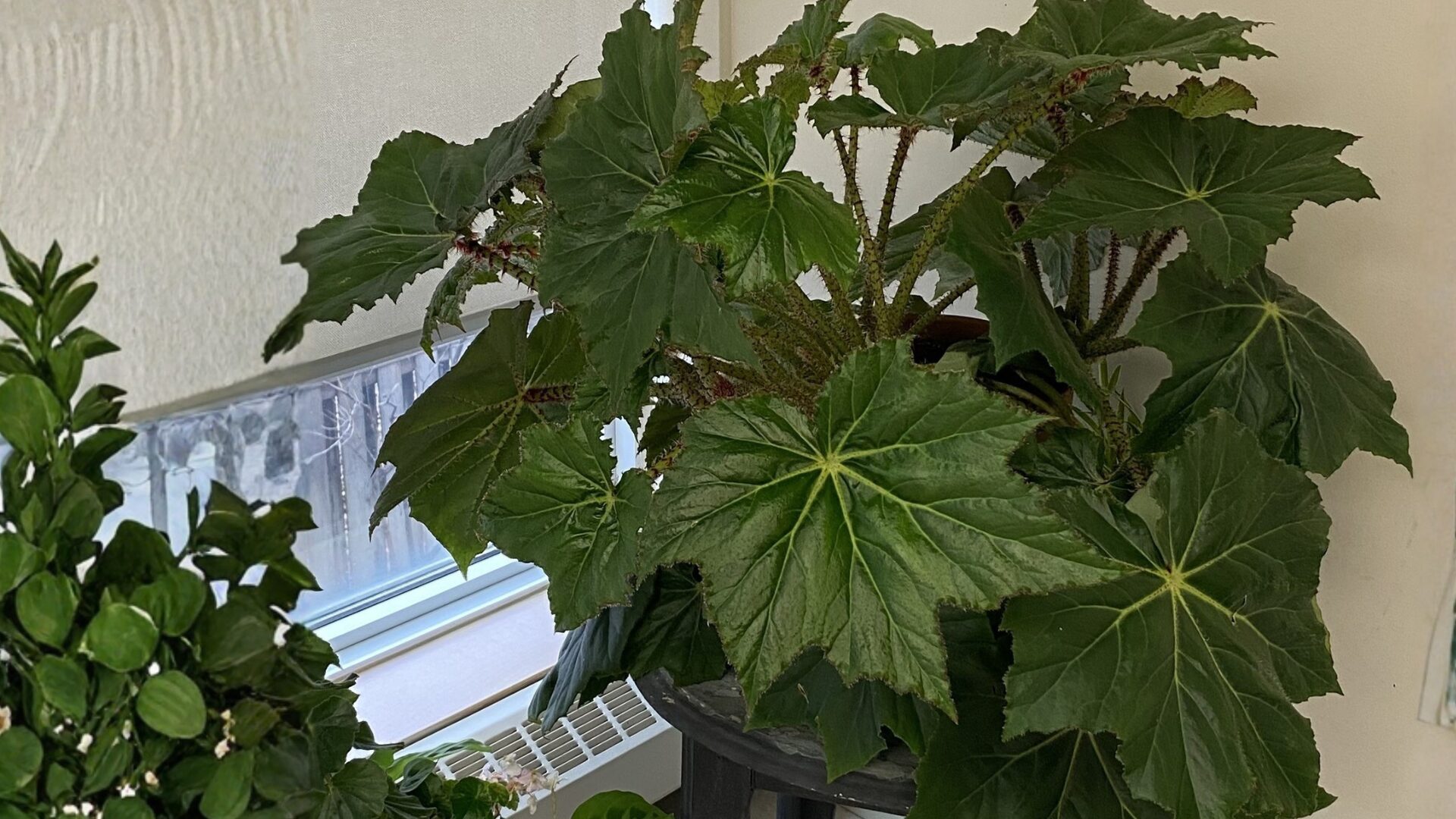
Begonia ricinifolia ‘Immense’ that a resident cares for and started from a cutting last spring
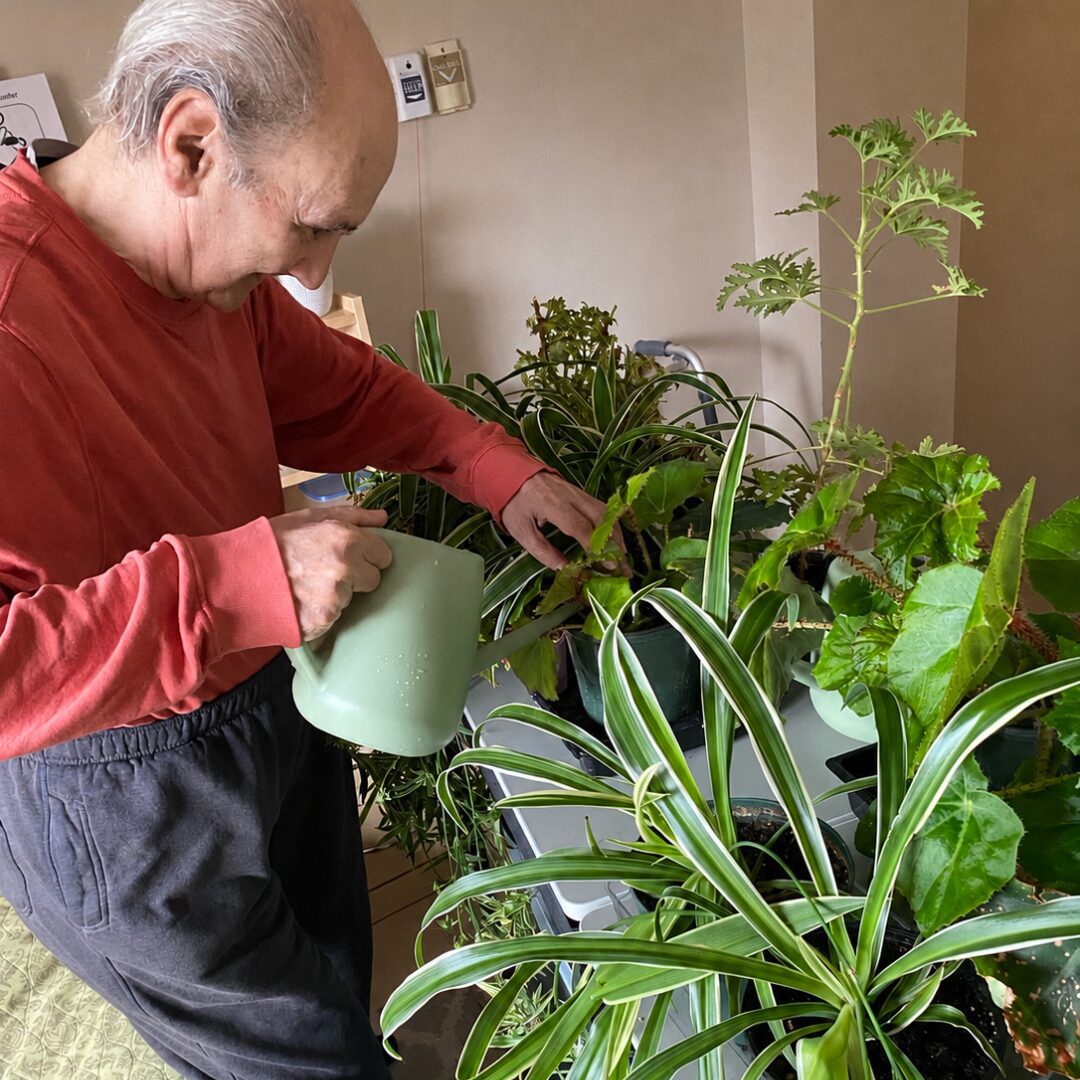
A resident caring for propagated spider plants, begonias, and scented geranium brought to him using a Therapeutic Horticulture cart.
Plants Create Opportunities for Contribution
One theme that emerges strongly throughout Matthew’s work is the importance of contribution, “It feels good to give and be part of something larger than yourself.” In long-term care, opportunities to care for something and genuinely add value to the community can hold deep meaning.
Plants naturally create those opportunities.
Residents may:
- select, save and start seeds
- propagate plants and make nature-based gifts for families, volunteers and staff
- monitor plant health and growth
- water indoor and outdoor potted plants
- harvest herbs for cooking and baking programs
- create flower arrangements for shared spaces
- participate in tending the community gardens
Gardening and plant-based activities foster feelings of accomplishment; new leaves emerge, flowers bloom, seeds sprout. Participants can see the results of their care, which often supports motivation, confidence and ongoing engagement.
Looking Ahead
Therapeutic horticulture continues to grow within Matthew’s practice and within the broader recreation environment at Sienna Senior Living.
Matthew’s current projects include building a sensory garden that is a dedicated space for Therapeutic Horticulture interventions – set to launch this month (see picture below). He is also bolstering an initiative called The Living Legacy Program which honours those who have lived in the long-term care community by adding a plant to the memorial garden. As well as implementing a Therapeutic Horticulture cart that brings plants and nature-based experiences to residents who benefit from one-to-one engagements in their rooms.
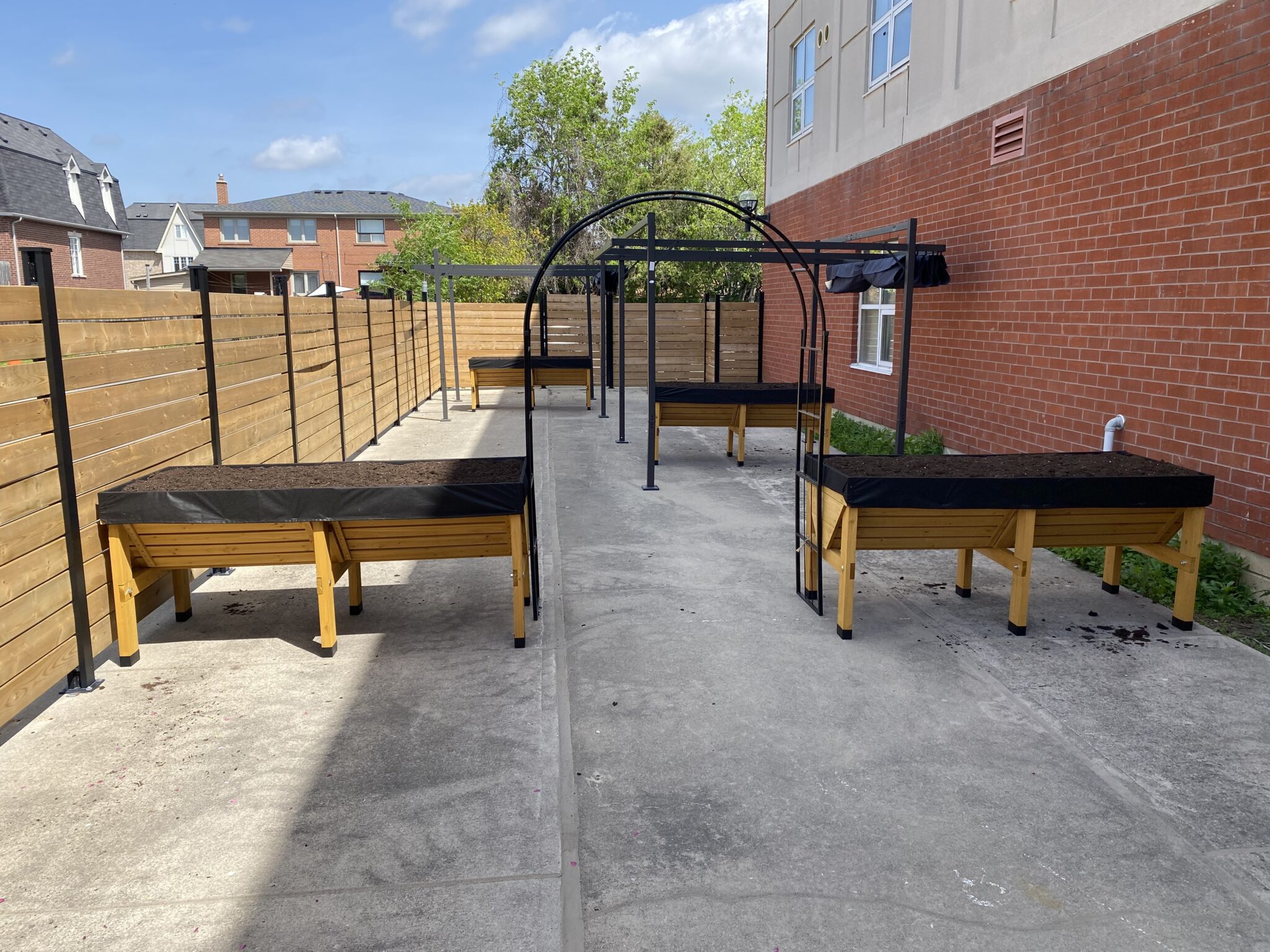
The beginnings of a Sensory Garden
Like many practitioners, Matthew’s approach reflects an understanding that Therapeutic Horticulture isn’t about creating elaborate gardens overnight. It’s about creating consistent opportunities for connection through plants and nature.
That consistency is often what allows programs to naturally and sustainably grow over time.
Supporting Teams Through Training and Practical Resources
One of the reasons Therapeutic Horticulture continues to expand across long-term care and community settings is that recreation teams, therapists, and allied health professionals are increasingly recognizing how adaptable and accessible plant-based programming can be.
At Root in Nature, our Corporate Team Training program was designed to help organizations build confidence in integrating therapeutic horticulture into existing recreation, wellness, and care approaches.
The training supports teams in:
- understanding therapeutic horticulture foundations
- facilitating adaptable plant-based activities
- using tools and environmental strategies safely
- and creating meaningful engagement opportunities across diverse participant needs
Whether a team is just beginning with a few plants on a windowsill or expanding toward larger Therapeutic Horticulture initiatives, the goal is the same: creating more opportunities for connection, participation, and wellbeing through plants and nature.
You can learn more about the program on our Corporate Team Training page.
Final Thoughts
Therapeutic Horticulture rarely begins with elaborate gardens or large-scale programming. More often, it begins with a single seed, a plant on a windowsill, a resident reaching toward a familiar leaf, a conversation sparked by the scent of herbs.
Over time, those small moments can bloom into something much larger — opportunities for connection, contribution, identity, and belonging within the life of the community.