






Therapeutic Horticulture Foundations & Facilitation
Why Take This Course
This self-paced course introduces the core concepts of therapeutic horticulture (TH) alongside practical skills for facilitating programs across diverse settings. You’ll explore what TH is, who it serves, and how it’s applied, while learning to assess participant needs, design supportive environments, and develop nature-based activities aligned with health and wellbeing goals. The course also builds essential horticultural knowledge and shows how to adapt tools and techniques for a range of physical, cognitive, emotional, and sensory needs.
The focus then shifts to hands-on facilitation. You’ll learn how to structure sessions, sequence activities, and align horticultural tasks with therapeutic outcomes for group and individual work. Safety and inclusion are integrated throughout, equipping you with a clear understanding of the field and a practical toolkit to facilitate with confidence.
Course Description
Therapeutic Horticulture Foundations & Facilitation provides the essential knowledge and practical skills needed to facilitate therapeutic horticulture activities in a wide range of settings. The course covers core TH concepts, including how to adapt or design therapeutic environments, identify participant needs, and create nature-based activities that support health and wellbeing goals.
You’ll build foundational horticultural skills while learning how to adapt tools, techniques, and tasks for people with diverse physical, cognitive, emotional, and sensory needs. You’ll also develop facilitation strategies for delivering intentional, structured sessions, including activity selection and sequencing, aligning horticultural tasks with therapeutic outcomes.
Safety is integrated throughout the course, with guidance on recognizing and managing environmental, physical, emotional, cognitive, behavioral, and horticultural risks. By the end, you’ll have a strong understanding of TH principles and a practical toolkit for planning, facilitating, and evaluating goal-aligned, nature-based sessions.
Course Fee & What's Included
Course Fee: CAD $495
Course Manual (optional): CAD $30
Registration fee includes:
- Eight video-based lessons (80 topics) with resources
- Guest speaker videos
- Lifetime access
- Certificate of completion & Digital badge
- Eligibility for CE credits
- Bonus: Six month free membership to GrowTH Network*, our professional support platform for TH practitioners.
*This offer is available to non-members only. Current GrowTH Network Members receive a 20% course discount with their membership.
Time Commitment
This includes 15 hours of video lessons, as well as quizzes and resource materials.
You will not be required to attend any live calls during this course – all content is pre-recorded and self-paced.
Continuing Education Credits
- This continuing education session content is pre-approved by NCTRC for 900 min (1.5 CEUs)
- Approved by the Canadian Horticultural Therapy Association—CHTA for 0.3 points per 40 contact hours of instruction
- Accepted by Master Gardener programs—meets the criteria for continuing education in many U.S. and Canadian programs
How it Works
After you purchase, simply sign in to your account at the top right corner of the website and you’ll find the course and manual (if purchased) under Courses → My Courses.
You’ll have lifetime access, so you can move through the lessons at your own pace and revisit them anytime.
Course Manual Details
The 179 page course manual is a comprehensive PDF that captures all the main points from the course in one place. It’s designed to:
- Consolidate the key concepts so you can focus on learning instead of taking extensive notes
- Serve as a lasting reference, like a textbook you can return to anytime
- Support open-book quiz completion
- Provide a quick refresher on foundational knowledge as you move into more advanced or practice-based training
- Provide a glossary of 130+ TH Terms
While not required, many students find the manual to be a helpful resource they continue using well beyond the course.
Learn from Experienced Instructors
Emilee Weaver
Katie McGillivray, HTR
Featured Guest Speakers
Chadwick Lewis
Owner & General Manager, Urban Fresh Produce
Lynn Leach, HTR
Horticultural Therapist & Landscape Designer, Bird’s Foot Design Studio
Matthew Johnson
Owner/Operator, Three Rabbit Farms
What You'll Gain
- Understand core TH principles and how they are applied across diverse settings
- Build foundational facilitation and horticulture skills to design and lead goal-aligned TH activities
- Learn how to adapt environments, tools, and tasks to support diverse participant needs
- Gain confidence in recognizing and managing key TH safety considerations
- Receive a digital badge, CE eligibility (NCTRC®, CHTA), and a six-month GrowTH Network membership
Course Structure

Foundations & Fundamentals of Therapeutic Horticulture
This lesson grounds you in the core concepts that define therapeutic horticulture. You’ll explore what TH is (and is not), its history, populations and settings, ethical foundations, and the role of research, universal design, and program models in shaping effective practice.

Therapeutic Horticulture Program Development
Learn the stages of TH program development and how thoughtful, goal-driven TH programs are built from the ground up. This lesson covers site and participant assessment, goal setting, outcome tracking, scheduling, year-round programming, and real-world considerations such as employment models and income pathways.

Developing Therapeutic Programming Environments
This lesson focuses on creating environments that actively support therapeutic goals. You’ll explore garden types, sensory plants, soil and growing media, plant toxicity considerations, and practical strategies for developing safe, inclusive, and goal-aligned spaces.

Outdoor Plant Maintenance Skills & Gardening Tools
Build confidence in outdoor gardening skills through a therapeutic lens. You’ll learn how to select and adapt tools, support physical access and safety, and manage tasks such as pruning, watering, transplanting, and pest management in ways that meet participant needs.

Indoor Plant Maintenance Skills & Seed Starting
This lesson introduces indoor plant care and seed starting as therapeutic activities. You’ll explore indoor transplanting skills, seed starting and maintenance fundamentals, and ways to select and care for indoor plants in ways that support different abilities, settings, and program goals.

Therapeutic Horticulture Activity Facilitation
Bring everything together with a focus on facilitation. You’ll learn how to design and structure sessions, develop activities, build session plans, budget for materials, integrate nature metaphors, and apply TH-specific safety considerations across diverse facilitation contexts.
Download a Course Preview
Get a glimpse inside the course with this comprehensive preview video and detailed course outline. It brings together a series of clips from the lessons, giving you a feel for the learning style, topics covered, and the supportive approach that guides you through the foundations of TH.
Benefits of Therapeutic Horticulture
Enhancing the Environment
Plants and nature create a calming and relaxing environment that can promote wellness and enhance the overall atmosphere of a therapeutic session.
Reducing Stress
Exposure to plants and nature has been shown to reduce stress and anxiety levels, which is beneficial for individuals who are experiencing mental health conditions or chronic illnesses.
Improving Physical Health
Spending time in nature and around plants can promote physical activity and exercise. Therapeutic horticulture activities can be incorporated into therapeutic sessions to promote physical health.
Boosting Mood
Being in nature and around plants can boost mood and help individuals feel more positive and optimistic. This can be especially helpful for individuals who are experiencing depression or other mood disorders.
Promoting Social Connections
Group therapeutic horticulture sessions can provide opportunities for social interaction and connection, as well as promote bonding and create a sense of community.
Improved Client Outcomes
Therapeutic horticulture has been shown to improve a range of outcomes for clients, including mental health, physical health, and overall quality of life. Practitioners can learn how to effectively use horticulture to improve their clients’ outcomes.
What Our Learners Are Saying
FAQs
Are more courses offered on this topic if I want to continue my learning?
Yes. After completing Therapeutic Horticulture Foundations & Facilitation, you can continue your learning in two main ways.
1. Advanced Course: This course provides a strong foundation and can be used as a stepping stone into our advanced training. The Advanced Therapeutic Horticulture Skills course leads to a TH Certificate.
2. Standalone professional development and mini-courses: You may also choose to continue through shorter, topic-focused learning opportunities. These include thematic courses such as Supporting Emotional Resilience and Action in a Changing Climate, along with additional mini-courses designed to deepen specific skills or explore focused practice areas without committing to a full certificate pathway.
For current offerings, waitlists, and upcoming launch dates, please visit our Courses Overview page, the Root Beat newsletter, and social channels.
Will I be qualified to practice therapeutic horticulture after taking this course?
Yes—with important context. Therapeutic Horticulture Foundations & Facilitation is designed to equip you to integrate therapeutic horticulture into your existing professional role. After completing the course, you can confidently design and facilitate therapeutic horticulture activities and sessions within appropriate settings, using plants and nature as intentional, goal-aligned therapeutic tools.
However, this course does not confer the professional title of Therapeutic Horticulture Practitioner. Graduates may describe themselves as a Therapeutic Horticulture Ally who hold specialized training in TH, reflecting their training in foundational TH principles, facilitation strategies, safety considerations, and inclusive practice across diverse populations and environments.
If your goal is to deepen your practice further we recommend continuing into the advanced-level course. This course builds on the Foundations & Facilitation curriculum and supports more complex program leadership and design roles.
Does this course certify me to become a horticultural therapist?
No, this course does not certify you as a Horticultural Therapist (HT).
This course provides training in therapeutic horticulture foundations and facilitation. Even the full Therapeutic Horticulture Certificate pathway is designed to prepare learners to practice therapeutic horticulture—not horticultural therapy.
Horticultural therapy is a distinct clinical profession with its own training pathways and requirements; this course focuses on therapeutic horticulture as an evidence-informed practice approach.
Is there group pricing?
Yes, we can provide discount codes for groups of three or more. Please contact courses@rootinnature.ca to discuss a custom code for your group size.
Professional Recognition & Growth
Specialized Knowledge
This course provides knowledge and practical skills for using plants, gardening, and nature as therapeutic tools. It supports practitioners in designing, adapting, and facilitating TH activities within their roles and practice settings.
Professional Development
Training in TH is a meaningful form of professional development that strengthens practitioners’ skills and knowledge, enhancing their effectiveness in practice. Where applicable, this course may also support continuing education (CE) requirements.
Expanded Therapeutic Options
Through this course, practitioners can expand the range of therapeutic tools they can offer their clients and can provide clients with unique and effective therapeutic experiences.
Digital Badge & Certificate
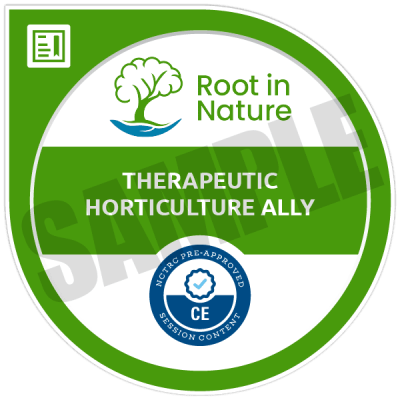
You will receive a digital badge as well as a certificate as a Therapeutic Horticulture Ally upon course completion, which can be used on social media, websites or resumes.
Best Ottawa Business (BOBS) Award Winner
Root in Nature was recognized for Best Performance in Social Entrepreneurship by the Ottawa Board of Trade and the Ottawa Business Journal.
Coralus Venture
Root in Nature is grateful to be selected as one of the Ventures working on the World’s To-Do List by Coralus Activators. We receive interest-free funding, connections and relationships to grow our impact.