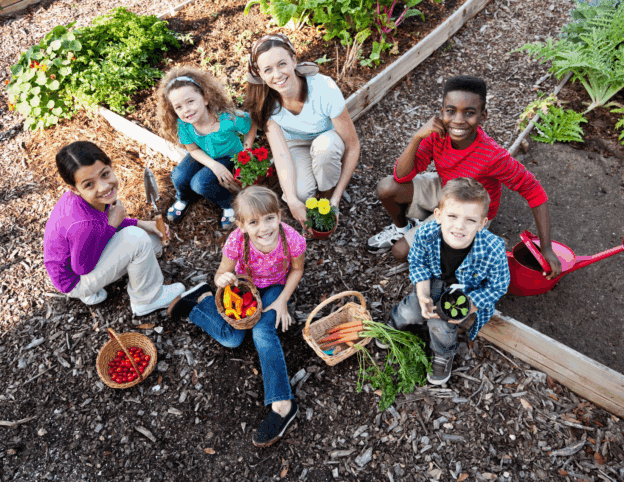
Therapeutic Horticulture for Children & Youth
Therapeutic Horticulture for Children & Youth is designed as an add-on to our core therapeutic horticulture courses, or as additional learning for trained practitioners. This course helps practitioners adapt therapeutic horticulture for children ages 5–12 and youth ages 13–18, with a focus on developmental considerations, meaningful participation, safety, facilitation, activity planning, and practical adaptations. Learners will explore child and youth participation models, sensory plants, plant and tool safety, gardening best practices, person-centred facilitation, and ways to support neurodivergent children through therapeutic horticulture. The course includes practical examples, guest speaker insights, mindful invitations, and activity ideas to support safe, engaging, and developmentally responsive sessions in education, healthcare, community, recreation, and therapeutic settings.
Therapeutic Horticulture for Children & Youth builds on foundational therapeutic horticulture knowledge by exploring how plants, gardening, and nature-based activities can be thoughtfully adapted for children and adolescents. The course supports practitioners in understanding developmental considerations, participation models, safety, facilitation strategies, and practical activity planning for children ages 5–12 and youth ages 13–18.
Learners will explore the benefits of therapeutic horticulture for children and youth, including opportunities to support sensory engagement, emotional regulation, confidence, social connection, skill-building, and meaningful participation. The course also introduces therapeutic horticulture as an interdisciplinary approach that can complement education, recreation therapy, occupational therapy, social work, mental health, community programming, and other child- and youth-focused settings.
Through practical examples, guest speaker insights, mindful invitations, activity adaptations, and planning tools, learners will strengthen their ability to design safe, engaging, and developmentally responsive therapeutic horticulture sessions. Topics include child and youth participation models, learning goals and success criteria, sensory plants, plant toxicity and safety, tools safety, gardening best practices, person-centred facilitation, therapeutic use of self, and supporting neurodivergent children through horticultural therapy.
By the end of the course, participants will have a stronger understanding of how to plan and facilitate therapeutic horticulture activities that honour children’s and youth’s voices, abilities, interests, and goals while creating safe, supportive opportunities for connection with plants and nature.
Course Content
Course Content
About Instructor
Alexis Ashworth
16 Courses
Course Includes
- 6 Lessons
- 39 Topics
- 4 Quizzes